Leaks in fittings: 7 common causes and how to eliminate them
2 min readRoyal Integrity technical team
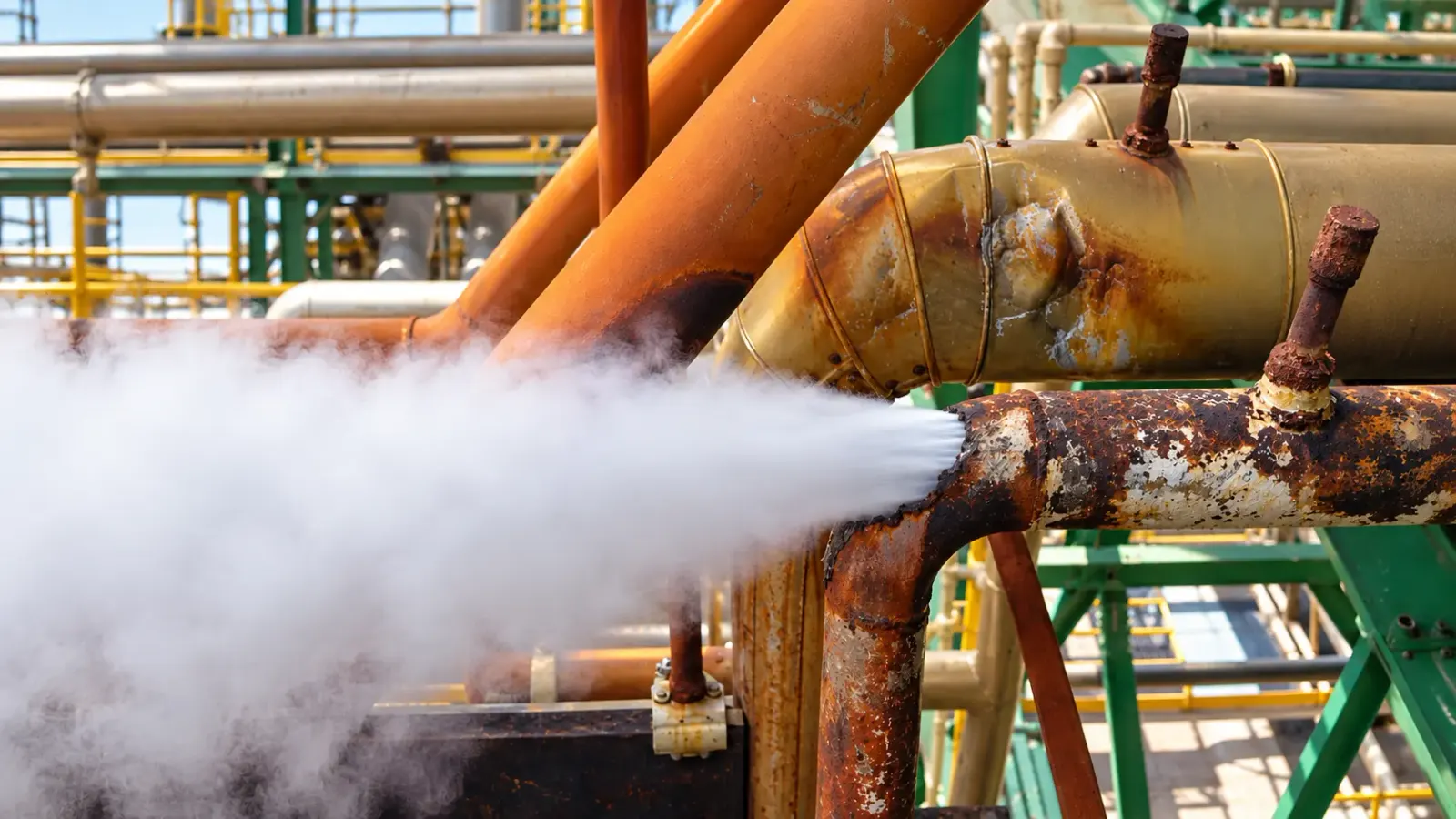
A typical plant has thousands of flanged joints, and one is enough to cause a shutdown, a fire or a fugitive emission. The frustrating part is that many leaks come back after “tightening the bolts”. To eliminate them you have to understand why they happen.
The 7 most frequent causes
- Incorrect or uneven torque. Without a tightening sequence and a defined torque, the gasket is compressed unevenly. The ASME PCC-1 guideline is the reference for assembling flanged joints.
- The wrong gasket for the pressure, temperature or fluid.
- Damaged flange faces: scratches, steam cuts, pitting or warping.
- Thermal cycles that expand and contract the joint until the load relaxes.
- Corrosion of bolts and studs, which changes the tension and loosens the gasket.
- Misalignment between pipes that strains the flange.
- Vibration from pumps, compressors or flow.
Solutions for each case
- Controlled tightening procedure: cross pattern, several passes and calculated torque.
- The correct gasket for each service.
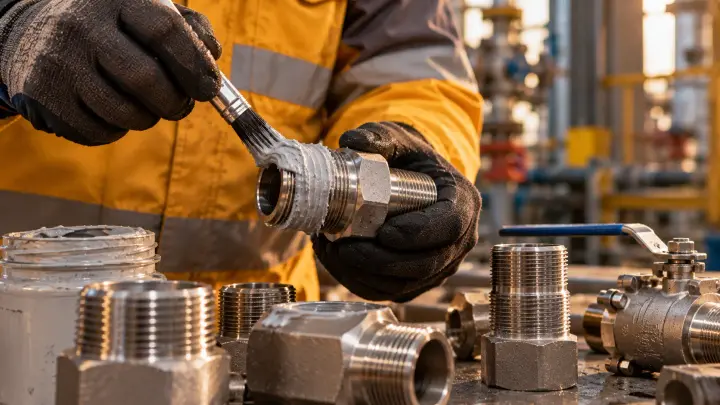
- Sealants and gasket dressings: compounds that flow into and fill imperfections in the flange face, right where most leaks start.
- Extruded gasket compounds for warped faces where a conventional gasket will not seal.
- Corrosion protection of the joint so the bolts keep their tension.
High-temperature sealants: when to use them
Deacon sealants (a Jet-Lube line) are thermo-reactive compounds that expand with heat to fill gaps and irregularities. For example, Deacon 8875-Thin works from approximately 66 °C to 980 °C as a fitting sealant and gasket dressing, and Deacon 770 from 93 °C to 510 °C as a thread sealant, fitting sealant or dressing, according to the manufacturer’s data sheets. They are useful in steam, hot gases, and pitted or warped fittings.
Prevention is the best defense
Neutralizing leaks before they happen costs far less than responding to an emergency. A joint integrity program includes an inventory of critical fittings, tightening procedures, gasket selection and corrosion protection.
How Royal Integrity helps
Royal Integrity distributes Jet-Lube and Deacon sealants for leak prevention, containment and elimination in fittings, valves and piping, designed for high pressures, high temperatures and broad chemical compatibility. It also protects joints with Zerust Flange Saver VCI technology.
Frequently asked questions
Does tightening the bolts further stop the leak? Sometimes temporarily, but it can crush the gasket or damage the bolts. You have to address the cause.
Can a flange with a damaged face be sealed? In many cases yes, with sealants or compounds that fill imperfections, while its repair is scheduled.
Which standard governs the assembly of fittings? ASME PCC-1 is the most widely used guideline for gasketed flanged joints.
Do you have recurring leaks? Schedule a technical consultation.