
Frac-out in horizontal drilling: how to prevent inadvertent fluid returns
2 min readRoyal Integrity technical team
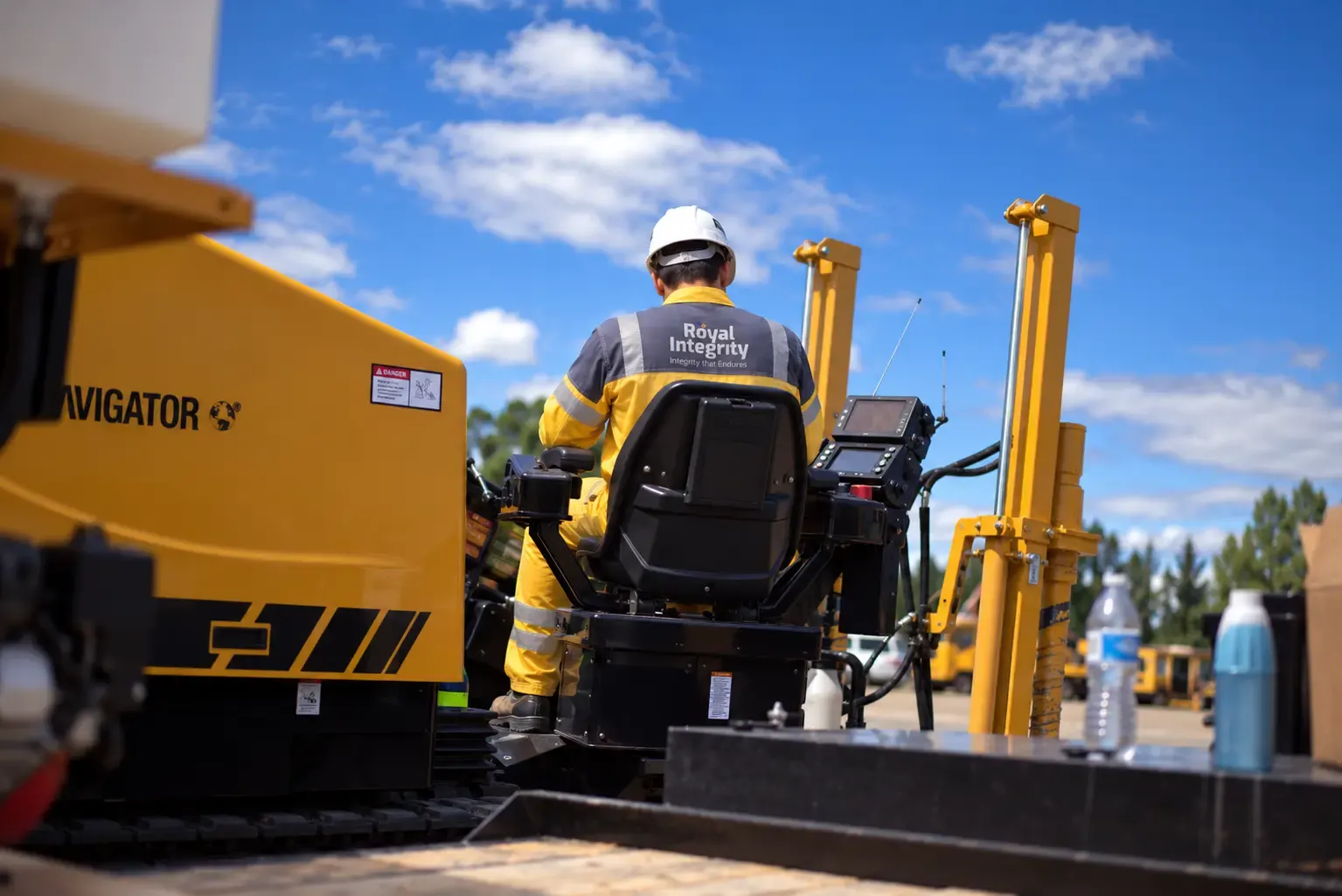
A frac-out, or inadvertent fluid return, happens when drilling fluid reaches the surface somewhere other than the entry or exit pits: in a pasture, on a road or in a riverbed. Besides stopping the job, it can trigger environmental penalties and problems with communities and authorities.
Why does a frac-out happen?
The fluid pressure in the borehole annulus exceeds the strength of the soil above it, the fluid opens fractures and finds the easiest path upward. The factors that favor it most are:
- Shallow cover over the bore path, typical at stream and road crossings.
- Weak or fractured soils, fills or open gravels.
- A dirty hole: accumulated cuttings restrict the annulus and spike the pressure.
- Fluid with excessive viscosity or density for the section.
- Advancing too fast for the pumping rate.
How to prevent it
- Bore path design with enough depth in sensitive areas and calculated allowable pressures.
- A drilling fluid designed to clean the hole with the lowest possible annular pressure.
- Rheology control every shift, avoiding loading the fluid with solids.
- Monitoring of returns and annular pressure: if returns drop, something is happening.
- A contingency plan with barriers, suction pumps and trained personnel on site.
What to do if it happens
- Stop or reduce pumping immediately.
- Contain the fluid with barriers and recover it with suction equipment.
- Notify according to the project’s environmental management plan.
- Adjust the fluid and the operation before resuming.
The role of an environmentally friendly fluid
Although the best frac-out is the one that never happens, using fluids formulated for low environmental impact reduces the consequences of an event and makes final disposal of mud and cuttings easier, something increasingly required by permits and management plans.
Royal Integrity on your project
With Jet-Lube’s ProAction Fluids line, Royal Integrity offers polymer and bentonite fluids designed to stabilize the borehole, reduce friction and keep the hole clean with the lowest annular pressure. We support system selection and field training.
Frequently asked questions
What does frac-out mean? It is the uncontrolled release of drilling fluid to the surface through fractures in the soil.
Can you drill under a river with no risk of frac-out? The risk is never zero, but it drops considerably with a good bore path, the right fluid and monitoring.
Is drilling fluid a pollutant? It depends on its formulation. Systems based on bentonite and specialized polymers are designed to minimize impact.
Are you about to cross a body of water or a sensitive area? Schedule a technical consultation.


