
Stuck pipe in horizontal directional drilling (HDD): causes and how to avoid it
3 min readRoyal Integrity technical team
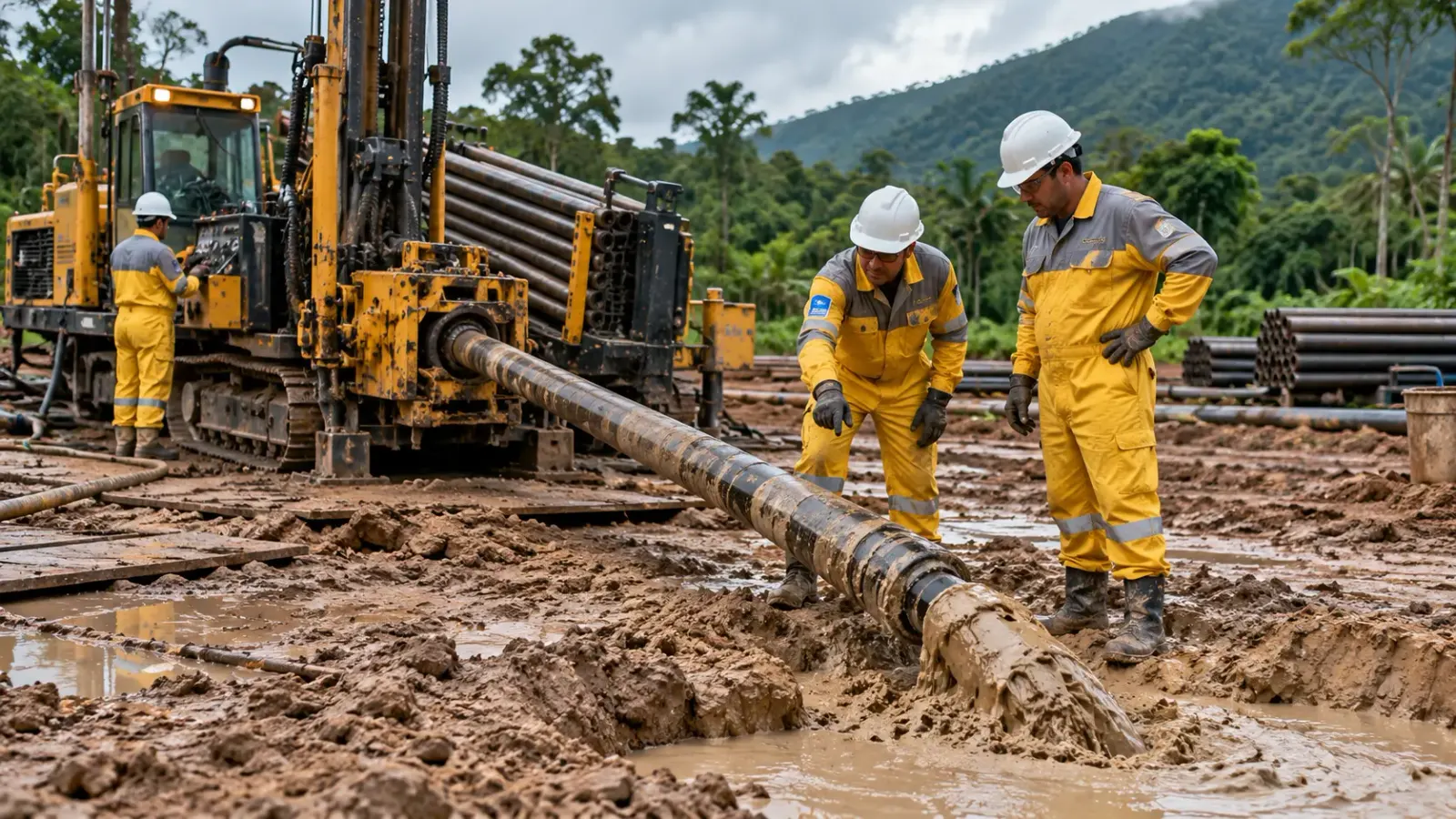
On a horizontal directional drilling (HDD) project, few things are as costly as a pipe stuck halfway through the crossing. Every hour stopped adds equipment rental, crews on standby and the risk of losing the drill string or the downhole tool. The good news: most stuck-pipe events can be anticipated and avoided from the drilling fluid design stage.
What is stuck pipe in HDD?
It is the condition in which the drill string, the reamer or the product pipe during pullback can neither advance nor retreat. When the pull force exceeds the capacity of the rig or the pipe, the result can be a tool lost in the hole, an abandoned crossing and the need to drill again.
The 5 most frequent causes
- Cuttings accumulation (cuttings bed). If the fluid lacks the viscosity or flow rate to carry the solids, they settle on the low side of the hole and hold back the string.
- Borehole collapse. In loose sands and gravels, a fluid unable to build a filter cake leaves the walls unsupported.
- Reactive clays. Clays that absorb water swell, stick to the bit (bit balling) and reduce the hole diameter.
- Insufficient reaming. If the final hole diameter is too close to that of the product pipe, pullback becomes a pull against friction.
- Lost circulation. When the fluid escapes into the formation, the hole loses cleaning and stability just when it needs them most.
How to prevent it through the drilling fluid
The fluid is not just another supply: it is the system that keeps the hole alive. A well-designed program must:
- Match the actual soil. Clays, sands, gravels and rock call for different mixes; the geotechnical study defines the fluid base.
- Control rheology. Enough viscosity and yield point to suspend cuttings even when pumping stops.
- Build a thin, firm filter cake. It reduces fluid loss to the formation and stabilizes the walls.
- Inhibit clays. Polymer additives that encapsulate clay prevent swelling and bit balling.
- Lubricate. Less friction means less torque while drilling and less pull force during pullback.
Operating practices that reduce the risk
- Measure viscosity (Marsh funnel), density and sand content in the field every shift.
- Monitor returns: low returns or returns with few cuttings are an early warning.
- Keep drilling and reaming speeds consistent with the pump flow rate.
- Do not leave the hole without circulation for long periods.
- Ream to a diameter suited to the product pipe according to the crossing design.
How Royal Integrity helps
Royal Integrity distributes in Colombia the specialized polymer and bentonite fluids from ProAction Fluids, the Jet-Lube line designed for HDD, microtunneling and piling. Our team supports system selection based on the soil and trains the crew in the field, to reduce friction, stuck pipe and lost tools.
Frequently asked questions
Can a stuck pipe in HDD be freed? In many cases yes, by regaining circulation, conditioning the fluid and applying controlled pull and rotation. The faster you act, the higher the chance of success.
What is the main cause of stuck pipe? Poor hole cleaning from a fluid that does not carry the cuttings, followed by wall instability.
Do polymer fluids work in all soils? No. Each formation calls for its own mix; that is why fluid design starts from the soil study.
Does your next crossing go through clays or gravels? Schedule a technical consultation and let’s design the fluid before drilling.


