
HDD drilling fluids: bentonite or polymers, which to choose for each soil?
3 min readRoyal Integrity technical team
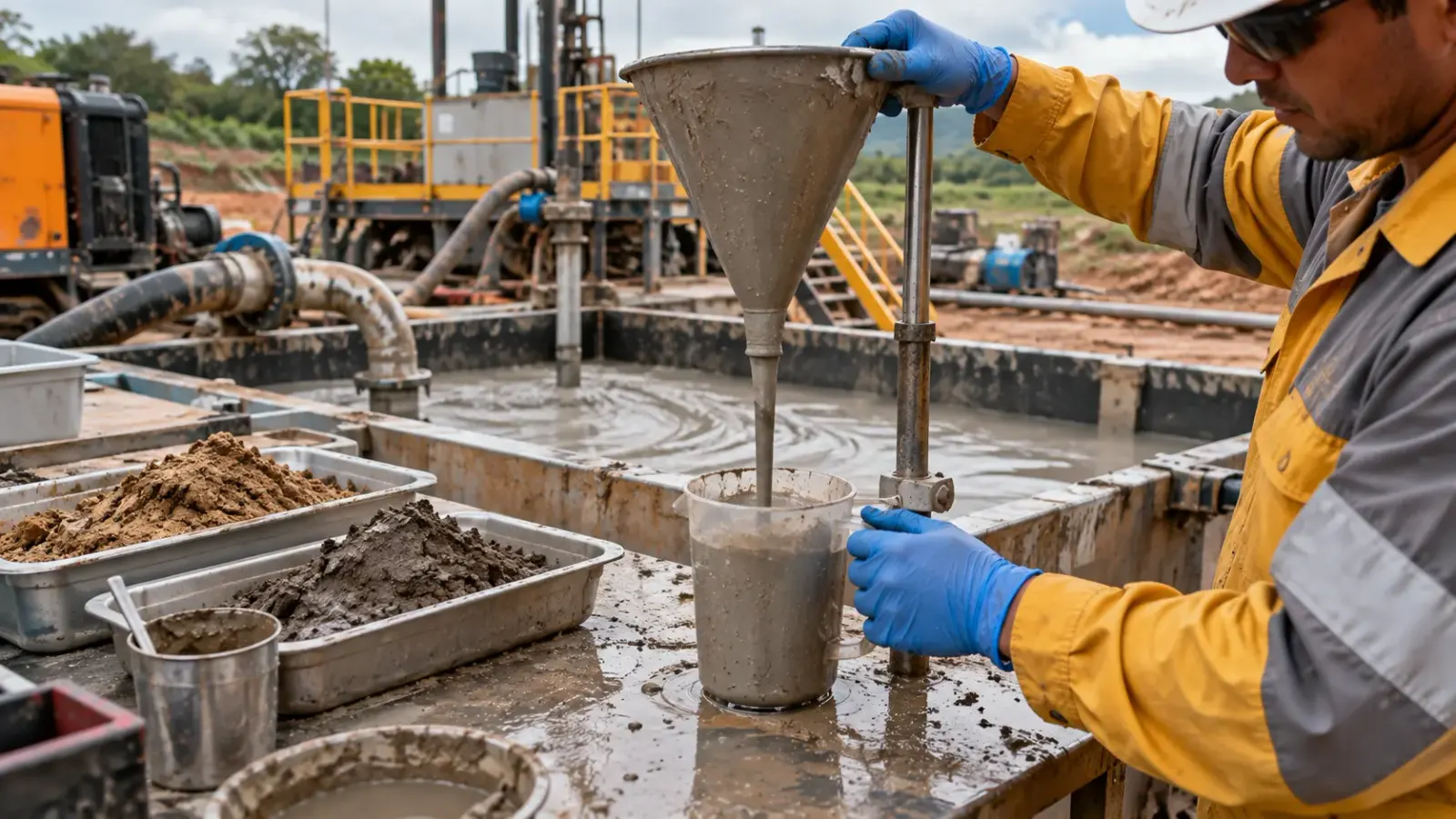
Choosing the wrong fluid is one of the most common reasons an HDD crossing runs late, costs more or is lost. Bentonite and polymers do not compete: they complement each other. The key is knowing what each soil demands.
What drilling fluid is for
- Carrying cuttings to the surface.
- Supporting the borehole walls and preventing collapse.
- Cooling and lubricating the bit and the drill string.
- Reducing torque while drilling and pull force during pullback.
- Transmitting hydraulic power to downhole motors when they are used.
Bentonite mud: the standard in granular soils
Hydrated sodium bentonite forms a gel that suspends cuttings and a filter cake that seals the walls. It is the preferred base in sands and gravels, where the hole needs support and fluid-loss control. It requires good-quality water: hard or saline water hinders hydration, so it is usually treated with soda ash.
Polymer fluids: the answer for clays and special cases
Polymers encapsulate reactive clays, keeping them from swelling and sticking to the bit. They are also used on their own, without bentonite, in soils where a cleaner or easier-to-dispose fluid is wanted, and as additives to improve the viscosity or filtration control of a bentonite mud.
Quick guide by soil type
| Soil | Main risk | Fluid approach |
|---|---|---|
| Reactive clay | Swelling, bit balling | Clay-inhibiting polymer, low solids loading |
| Fine sand | Collapse, fluid loss | Bentonite with filtration control |
| Gravel and cobbles | Lost circulation, suspension | High-yield bentonite + viscosifying polymer |
| Rock | Cuttings transport, wear | Fluid with good carrying capacity and lubricity |
| Mixed ground | Abrupt changes | A system adjustable by section, with tests every shift |
Mistakes that cost money
- Using the same recipe on every project.
- Not measuring viscosity, density and sand content in the field.
- Mixing the fluid with water without checking pH or hardness.
- Adding product “by eye” without the manufacturer’s mixing sheet.
Microtunneling and piling
In microtunneling the fluid also lubricates the annular space between the jacked pipe and the ground; less friction means less jacking force. In piling, it stabilizes the excavation before the pour. The same principles apply in both cases: soil, rheology and field control.
Specialized fluids with Royal Integrity
Royal Integrity brings Jet-Lube’s ProAction Fluids line to Colombia: polymer and bentonite fluids for HDD, microtunneling and piling, formulated to reduce friction and with an environmentally friendly profile. We help you define the system based on the soil study and train your mud crew.
Frequently asked questions
Can I drill with water alone? In some cohesive soils and short sections, yes, but it increases the risk of collapse and stuck pipe in most crossings.
Which is better, bentonite or polymer? It depends on the soil: bentonite for granular soils, polymer for reactive clays; they are often combined.
How often should the fluid be tested? At least every shift and whenever the formation changes.
Want a fluid program for your next project? Schedule a technical consultation.


