Anchor profile and surface cleanliness: what ISO 8501-1 and SSPC require before painting
2 min readRoyal Integrity technical team
Most anticorrosive coatings do not fail because of the paint: they fail because of surface preparation. If the steel is not clean or lacks the right roughness, the paint peels, blisters and lets corrosion in. Two concepts define everything: the cleanliness grade and the anchor profile.
Cleanliness grade: how much rust and contamination remains
The ISO 8501-1 standard defines visual cleanliness grades. The most widely used in industry are:
| ISO 8501-1 | Approximate SSPC/AMPP equivalent | Description |
|---|---|---|
| Sa 1 | SSPC-SP 7 | Brush-off blast cleaning |
| Sa 2 | SSPC-SP 6 | Commercial blast cleaning |
| Sa 2½ | SSPC-SP 10 | Near-white metal |
| Sa 3 | SSPC-SP 5 | White metal |
| St 2 / St 3 | SSPC-SP 2 / SP 3 | Hand or power tool cleaning |
Most high-performance systems in Oil & Gas require at least Sa 2½.
Anchor profile: the roughness that grips the paint
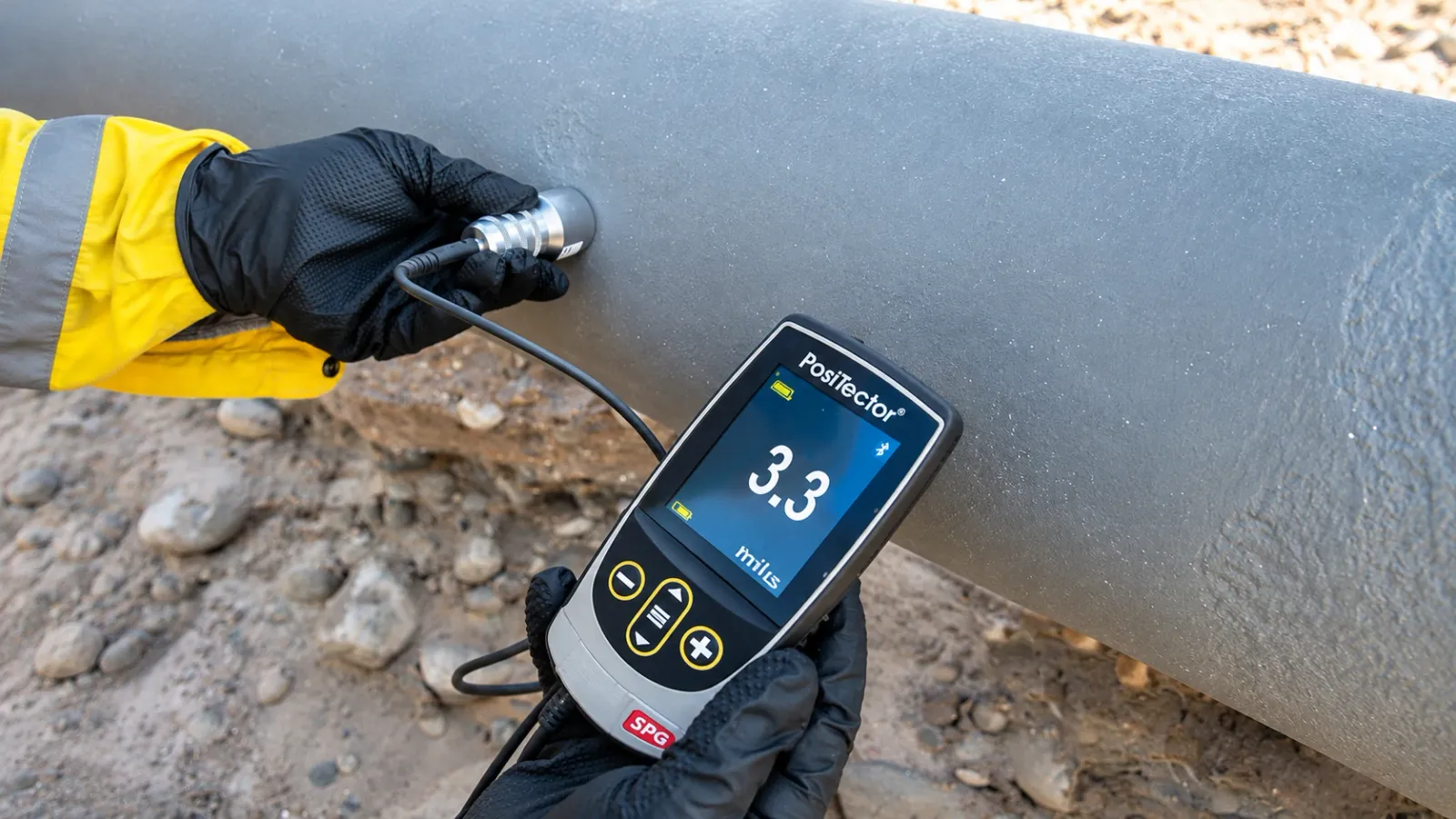
The anchor profile is the height of the peaks and valleys that preparation leaves on the steel. That texture increases the contact area and gives the paint something to “grip”. It is measured in microns (µm) with replica tape, ISO 8503 comparators or profilometers. Each coating manufacturer states the range its product needs.
- Insufficient profile: the paint peels off easily.
- Excessive profile: the peaks are left exposed above the film and rust first.
Common mistakes in the field
- Confusing power tool cleaning (St 3) with blast-type cleaning (Sa 2½).
- Not measuring the profile and assuming that “it looks rough”.
- Letting hours pass between preparation and painting, allowing flash rust.
- Ignoring soluble salts and moisture: painting over contaminated steel or below the dew point.
How to achieve Sa 2½ without abrasive blasting
Conventional hand tools (wire wheel, disc) polish the metal and do not create a profile. MontiPower’s Bristle Blaster® technology is different: its bristles strike and rebound, cleaning and creating a profile at the same time. The manufacturer reports cleanliness comparable to ISO 8501-1 Sa 2½ and SSPC-SP 10 with a profile in the range of 65–85 µm Rz, without sand or grit.
Checklist before painting
- Cleanliness grade verified against ISO 8501-1 standards.
- Profile measured and within the coating manufacturer’s range.
- Surface free of salts, oil and dust.
- Steel temperature at least 3 °C above the dew point.
- Time between preparation and painting within specification.
Royal Integrity supports you
With MontiPower equipment, Royal Integrity delivers superior surface preparation to ISO/SSPC, with ATEX certification for classified areas, and trains your personnel to measure and document quality.
Frequently asked questions
What anchor profile do I need? The one specified by the coating manufacturer; it varies with the type and thickness of the system.
Are Sa 2½ and SSPC-SP 10 the same? They are approximate equivalents from two different standards; both describe near-white metal.
Can a grinder create an anchor profile? Generally not: the disc polishes. You need a tool that generates texture.
Are your coatings failing early? Schedule a technical consultation.


